
Views: 0 Author: Site Editor Publish Time: 2026-09-15 Origin: Site


Selecting the exact size of your melting vessel demands precise engineering. You cannot rely on rough estimations. Incorrect sizing immediately leads to thermal inefficiency. It often causes severe equipment damage. It can even compromise the chemical purity of your final melt. Capacity depends entirely on two distinct factors. First, consider the specific gravity of your target metal. Second, analyze the physical geometric constraints inside your furnace chamber. We designed this guide for procurement teams and metallurgists. You will learn an evidence-based framework for calculating true capacity. We will show you how to match physical dimensions perfectly to specific furnace types. You will also discover how to specify purity levels for advanced manufacturing. By the end, you will confidently select the ideal graphite crucible for your specific thermal process.
Standard crucible "numbers" (e.g., #10, #20) are historical references; actual capacity must be calculated using the working volume and the specific density of the target alloy.
Working capacity is practically limited to 80–90% of the crucible’s brimful volume to prevent hazardous spillage and allow for thermal expansion.
Furnace type dictates physical clearance requirements; induction and vacuum furnaces require exact dimensional matching to maintain heating efficiency and prevent arcing.
Advanced applications (like battery materials) require distinct specifications beyond size, heavily relying on ultra-high purity ratings to prevent chemical contamination.
Many foundries underestimate the operational impact of improper vessel sizing. The wrong dimensions create a cascading series of mechanical and thermal problems.
Undersized crucibles waste furnace energy cycles. You spend more time bringing the furnace to temperature than actually melting usable product. Conversely, oversized crucibles in smaller furnaces disrupt thermal dynamics. They absorb too much energy. This prolongs melt times significantly. It also prevents the furnace from reaching optimal pouring temperatures efficiently.
Physical clearance inside the furnace chamber is vital. Inadequate clearance between the vessel exterior and furnace walls causes localized overheating. The trapped heat cannot circulate. In induction setups, poor clearance often leads to coil arcing. Electromagnetic fields bypass the vessel and strike the furnace insulation. This damages expensive coils instantly. Structural failure remains another major risk. A jammed vessel expands during heating. It will crack the furnace lining or shatter completely.
You must establish three main criteria before making a purchase. First, secure a verified dimensional fit. Measure the Top Outside Diameter (OD), Bottom OD, and Height. Second, calculate capacity accurately based on specific metal density. Finally, match the material composition directly to your furnace environment. Meeting these three criteria guarantees safe and efficient melting operations.
Common Mistake: Do not guess the required clearance. Always consult the furnace manufacturer manual for exact radial clearance tolerances.
The industry uses terminology passed down through generations. Modern engineering requires exact measurements instead of historical estimates.
You will often see standard numbers listed in catalogs. Examples include #10, #20, or #A-shape designations. These numbers originated over a century ago. They represented a rough rule of thumb. Traditionally, the number equaled the capacity in pounds of aluminum. A #10 vessel theoretically held roughly 10 pounds of molten aluminum. However, this system is now obsolete. Modern manufacturing processes vary wildly by manufacturer. A #10 from one supplier rarely matches the exact volume of a #10 from another.
Today, you must specify exact physical dimensions. We focus on three critical measurements:
Top Outside Diameter (OD): This measurement dictates clearance for handling tongs. It also ensures the vessel fits safely through your furnace opening.
Bottom OD: This dimension determines stability. It must sit securely on the furnace pedestal or base block without overhanging.
Height: The overall height must align perfectly within the furnace's active heating zone. If it stands too tall, you risk cold top-melts. The upper layer of metal will fail to liquefy.
Vessel shape heavily impacts your melting process. The standard A-shape features a tapered design. The wide top aids in charging bulky scrap. The narrow bottom fits standard pedestals easily. Cylindrical shapes offer a different advantage. They maintain a consistent diameter from top to bottom. This alters the surface-area-to-volume ratio. Cylindrical vessels often provide more uniform heat absorption during continuous melt cycles.
Capacity is not a universal metric. It changes entirely based on what material you melt inside the vessel.
You must calculate the brimful water volume first. Manufacturers normally provide this metric in liters. You then multiply this volume by the target metal's specific density. Let us look at standard densities. Aluminum sits around 2.7 g/cm³. Copper is much heavier at approximately 8.9 g/cm³.
Consider this exact constraint. A vessel holding exactly 10 kg of molten aluminum has a specific internal volume. If you fill that same vessel with copper or brass, it will easily hold over 30 kg of material. You cannot buy a "10 kg crucible" without specifying the metal. You will overload your handling equipment if you switch from aluminum to copper.
Brimful volume refers to filling the vessel to the very top edge. You must never operate at brimful capacity. Industry safety standards demand a strict margin. Only fill to 85% of the total volume. This leaves room for thermal expansion. It also prevents hazardous spillage during transport.
Furthermore, account for the initial bulk volume of cold scrap. Solid ingots and scrap pieces require more physical space. They pack inefficiently. You might need a larger vessel just to fit the cold charge, even if the final liquid volume is small.
Metal Density and Working Capacity Reference
Metal Type | Density (g/cm³) | 10L Vessel Brimful Capacity (100%) | Safe Working Capacity (85%) |
|---|---|---|---|
Aluminum | 2.70 | 27.0 kg | 22.9 kg |
Zinc | 7.14 | 71.4 kg | 60.6 kg |
Brass | 8.50 | 85.0 kg | 72.2 kg |
Copper | 8.96 | 89.6 kg | 76.1 kg |
Silver | 10.49 | 104.9 kg | 89.1 kg |
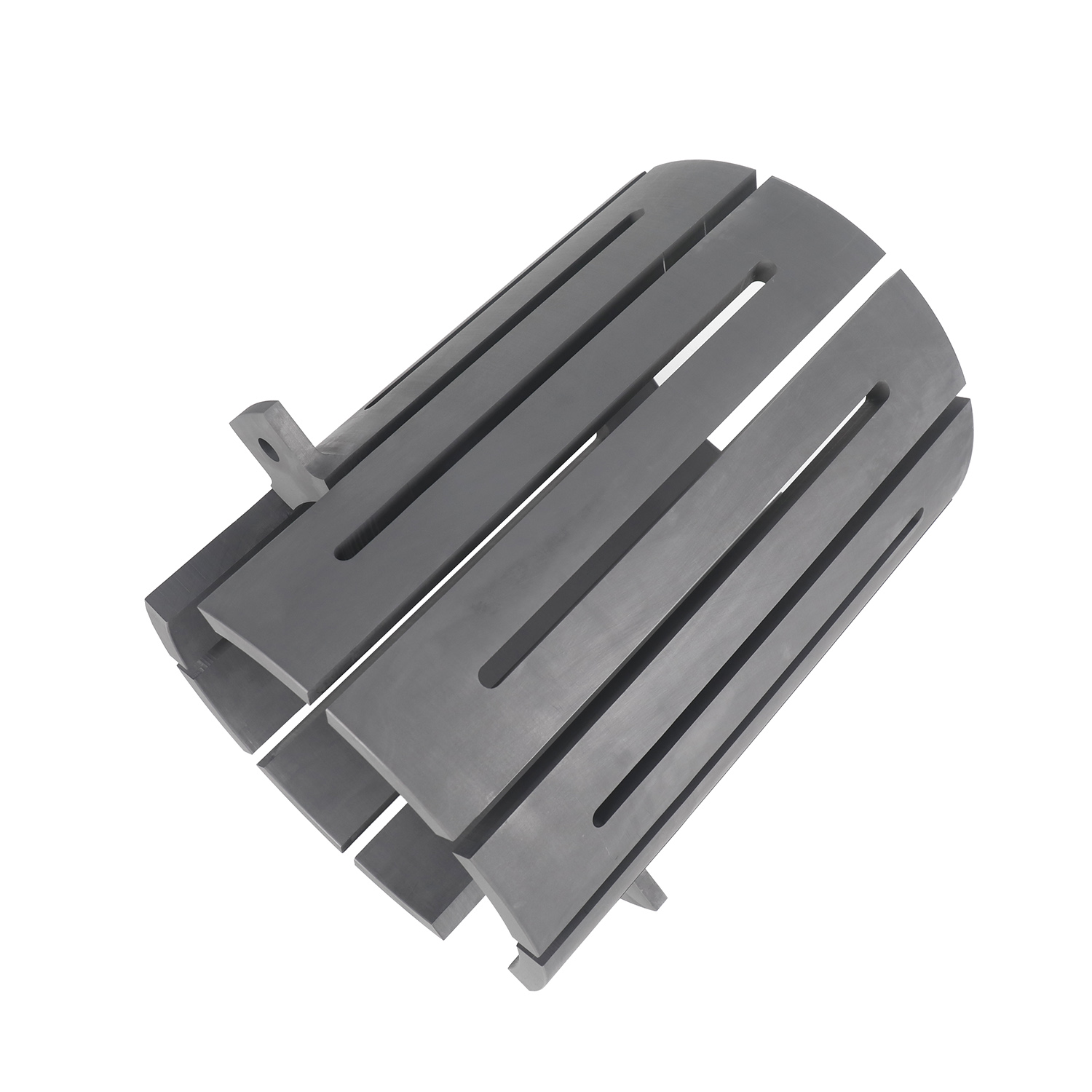
Furnace technology dictates exact vessel requirements. You must align the vessel design with the specific heating mechanism.
Induction melting relies on magnetic fields. It requires specific radial clearance between the vessel wall and the induction coil. Typically, you need 1 to 2 inches of clearance. This gap optimizes electromagnetic coupling. It prevents hazardous coil arcing. Wall thickness also plays a crucial role here. You must calibrate the wall thickness to the furnace's operating frequency. High-frequency furnaces require thinner walls. Low-frequency units need thicker walls to absorb the magnetic flux efficiently.
Vacuum applications operate under extreme conditions. Selecting standard Graphite for Vacuum Furnace applications requires stringent verification. You must check outgassing rates. Impurities in the vessel will vaporize under vacuum. This ruins the chamber atmosphere. Furthermore, thermal shock resistance is vital during rapid cooling cycles. Dimensional tolerances are much tighter in these systems. Fixed vacuum chamber constraints leave no room for oversized vessels.
Best Practice: Always request a vacuum-baked vessel for these applications to eliminate residual moisture and volatile compounds prior to installation.
Fossil-fuel furnaces expose the vessel to harsh, direct flames. The burner flame impinges directly on the lower section. Therefore, these applications require highly robust bottom dimensions. The base must withstand intense thermal shock and corrosive combustion gases. It also requires excellent structural support on pedestal blocks to prevent sagging under heavy liquid loads.
Certain industries prioritize chemical integrity above all physical dimensions. Advanced manufacturing processes treat the vessel as a critical purity barrier.
The energy storage sector demands flawless consistency. When sourcing a Graphite Crucible for Lithium-Ion Battery anode or cathode baking, dimensional sizing becomes secondary. Extreme purity requirements take priority. Processors demand ash content below 50 ppm. High-performance batteries often require below 5 ppm. Any metallic contamination causes internal battery shorts.
Sizing in this category focuses heavily on geometry over gross volume. Manufacturers often specify wide, shallow saggers. Some use specialized square designs. These shapes maximize surface area. Maximum surface area ensures uniform heat treatment across the battery powder bed.
The main vessel rarely operates alone. Foundries frequently utilize a High-Purity Graphite Plate as a base block or a protective lid. You must size these components correctly. Ensure the plate diameter matches the vessel's bottom OD perfectly. Alternatively, it can slightly exceed the bottom OD. This provides stable, uniform support under extreme high-temperature loads. A mismatched base block causes stress fractures in the vessel floor.
Transitioning from theory to procurement requires a structured approach. Use this checklist to formalize your requirements before contacting suppliers.
Audit Current Constraints: Grab a tape measure. Record the internal furnace diameter. Measure the maximum height clearance from the pedestal to the lid. Record the exact base pedestal diameter. You cannot alter these physical boundaries.
Define the Payload: Document the primary metal you intend to melt. List the required batch weight per cycle. Note the corresponding specific density of that metal. Use these figures to calculate the 85% safe working volume.
Assess Handling Equipment: Verify your existing infrastructure. Check your lifting tongs. Measure your pouring shanks. They must match the specific Top OD precisely. They also must match the outer contour of your shortlisted vessel. Poorly fitted tongs cause fatal accidents.
Verify Lead Times and Batch Consistency: Industrial scaling requires reliability. Ask the manufacturer about their replication tolerances. Ensure they can reliably replicate the precise dimensions across bulk orders. Verify their ability to maintain strict purity levels batch after batch.
Successful procurement relies entirely on discarding outdated numbering systems. You must favor strict volumetric and dimensional calculations. We have established how capacity changes drastically depending on metal density. We also demonstrated the necessity of aligning physical size and material grade with specific operational realities. Your furnace type dictates dimensional clearance. Your end-product determines the required purity level.
Take action today by auditing your current furnace dimensions. Document your target metal density and desired batch weights. We highly encourage you to consult directly with an applications engineer. Armed with your precise measurements, they can provide a verified, risk-free size recommendation for your next thermal process upgrade.
A: First, obtain the vessel's brimful water capacity in liters from the manufacturer. Multiply this volume by the specific density (g/cm³) of your alloy. This gives you the total theoretical weight capacity. Finally, multiply that number by 0.85. This provides the safe 85% working capacity, preventing spills and allowing for thermal expansion.
A: You generally need between 1 to 2 inches of radial clearance between the vessel exterior and the induction coil. This specific gap optimizes the electromagnetic coupling necessary for efficient heating. It also acts as a critical safety buffer to prevent dangerous electrical arcing against the vessel wall.
A: Yes, you can use the same physical size, but the weight capacity changes drastically. Copper is over three times denser than aluminum. A vessel holding 10 kg of aluminum will hold over 30 kg of copper. You must verify your handling equipment can safely lift the heavier copper load.
A: Battery materials require extreme chemical purity. Specially manufactured vessels undergo intense purification processes to reduce ash content below 50 ppm, or even 5 ppm. Standard vessels contain metallic impurities. These impurities contaminate the battery powders, causing dangerous internal short circuits or total battery failure in the final product.
A: Solid scrap packs very inefficiently compared to liquid metal. You generally need 40% to 60% more volumetric space for a cold scrap charge. Always size your vessel based on the initial bulk volume of your solid scrap, not just the final liquid volume you intend to pour.


