
Views: 0 Author: Site Editor Publish Time: 2026-09-01 Origin: Site


Selecting the right crucible material goes beyond a minor procurement detail. It directly dictates melt purity, energy efficiency, and operational downtime in high-temperature processing. Poor material choices cause rapid degradation and unexpected production failures. While both silicon carbide (SiC) and pure graphite offer exceptional thermal properties, their distinct chemical compositions dictate strict application boundaries. You cannot use them interchangeably without risking severe operational bottlenecks. This guide breaks down the critical technical differences between SiC and a standard graphite crucible to support your engineering decisions. We will explore how oxidation resistance, thermal shock, and melt purity influence material selection. You will discover exactly how atmospheric conditions and chemical sensitivities dictate the right component for your specific facility requirements.
Thermal Limits: Standard graphite excels in extreme temperatures (up to 3000°C in inert environments), while SiC is restricted to roughly 1600°C but offers superior oxidation resistance in open air.
Chemical Compatibility: Pure graphite provides a cleaner melt for sensitive materials, whereas SiC's durability makes it ideal for harsh, heavy-metal melting.
Application Specificity: A graphite crucible is mandatory for vacuum environments and sensitive battery applications, whereas SiC dominates continuous-cast foundries.
Hybrid Options: SiC Coated Graphite Parts bridge the gap, offering the machinability of graphite with the environmental resistance of SiC.
Understanding the fundamental chemistry of these materials is essential. Each material behaves uniquely under extreme thermal stress. We must examine their structural profiles to predict performance accurately.
Silicon carbide relies on a rigid carbon and silicon bonded matrix. This specific chemical structure provides immense physical density. It also grants the material extreme mechanical hardness.
You will notice distinct advantages when using SiC in open environments. The material develops an inherent protective glaze. When exposed to heat and oxygen, a thin layer of silica forms on the surface. This microscopic barrier prevents rapid oxidation in ambient atmospheres. It shields the internal matrix from further chemical degradation.
High Density: Resists physical penetration from solid metal charges.
Mechanical Hardness: Withstands aggressive scraping and flux applications.
Self-Glazing: Automatically generates a protective silica shield during operation.
Common Mistake: Operating SiC above 1600°C can destroy the protective silica glaze. You must respect this upper thermal limit to maintain structural integrity.
Pure graphite features a highly ordered crystalline carbon structure. This hexagonal lattice gives the material completely different physical characteristics. It feels softer but performs exceptionally well under pure thermal stress.
The crystalline structure provides exceptional thermal conductivity. Heat moves through the material rapidly and evenly. This property also delivers outstanding thermal shock resistance. However, pure carbon remains highly vulnerable to oxidation. At temperatures above 400°C in oxygen-rich environments, the carbon reacts to form carbon dioxide gas. The component will literally burn away into the atmosphere.
Crystalline Structure: Ensures uniform heat distribution across the melt.
Thermal Shock Resistance: Survives rapid heating and cooling cycles easily.
Oxidation Vulnerability: Requires strict atmospheric control to prevent vaporization.
Best Practice: Always pre-heat standard graphite slowly to drive out residual moisture before introducing it to extreme operating temperatures.
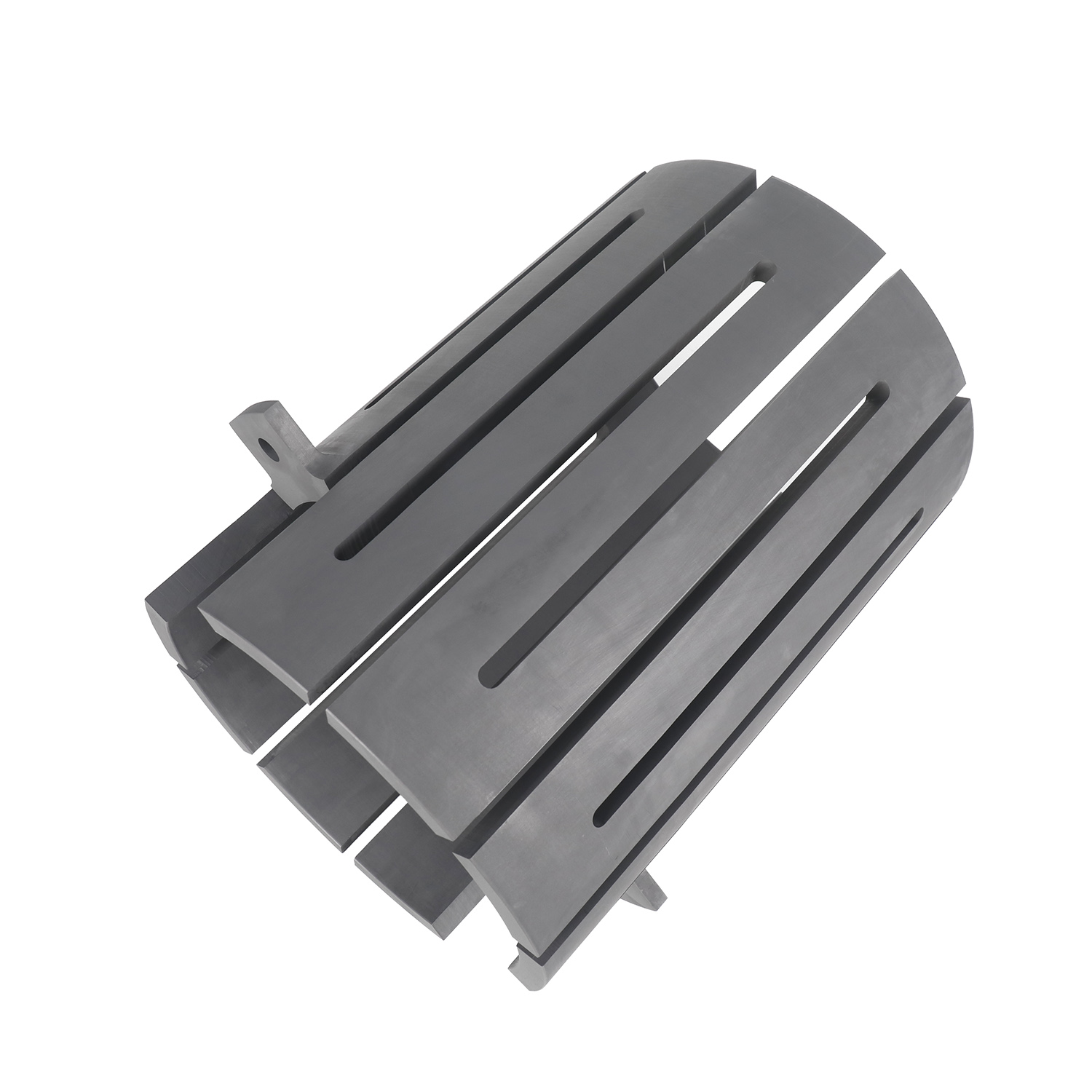
Material selection requires a rigorous evaluation of your specific processing environment. You must align the material properties with your daily operational realities.
You must carefully assess the primary furnace environment. Open-air induction or gas furnaces introduce massive amounts of oxygen. SiC naturally resists oxidation in these environments. The silica glaze continuously repairs itself if scratched. This makes SiC highly reliable for open-air foundries.
Conversely, graphite degrades rapidly in open air. The chemical reaction consumes the material layer by layer. However, graphite remains structurally sound in protective atmospheres. When you introduce argon or nitrogen gas, the oxidation risk disappears entirely. The lack of oxygen allows the carbon structure to remain intact.
Industrial processes often involve severe temperature fluctuations. Graphite handles rapid, extreme temperature changes without cracking. The crystalline structure flexes microscopically to absorb the thermal expansion. You can cycle graphite through extreme gradients safely.
SiC transfers heat efficiently but lacks this physical flexibility. The dense matrix makes it brittle under sudden thermal changes. It requires more controlled heating and cooling cycles. Ramping the temperature too quickly will cause structural fractures. You must implement programmed temperature ramps to protect SiC components.
Contamination ruins sensitive production batches. SiC can introduce silicon or carbon contaminants into highly sensitive melts. Heavy friction or extreme heat can leach these elements into the product.
High-purity graphite is chemically inert to most non-ferrous metals. It does not react with precious metals during processing. The carbon structure remains stable, ensuring a perfectly clean melt. This makes pure carbon the default choice for high-purity metallurgical applications.
Comparison of Key Thermal and Chemical Properties
Evaluation Criterion | Silicon Carbide (SiC) | Pure Graphite |
|---|---|---|
Maximum Operating Temperature (Air) | Up to 1600°C | Up to 400°C |
Maximum Operating Temperature (Inert) | Up to 1600°C | Up to 3000°C |
Thermal Shock Resistance | Moderate (requires ramp control) | Excellent (handles rapid cycling) |
Chemical Inertness | Moderate (can leach silicon) | High (inert to most metals) |
Theory must translate directly into application. Different industries demand specific material behaviors based on their unique processing environments.
Battery manufacturing demands extreme chemical precision. Anode material synthesis requires absolute zero heavy-metal contamination. Any trace impurities will severely degrade battery performance and lifespan. You cannot risk cross-contamination during production.
High-purity graphite serves as the baseline requirement for these processes. A specialized Graphite Crucible for Lithium-Ion Battery prevents chemical reactions with active battery materials. During high-temperature baking and calcination, the carbon remains completely stable. It provides a pure environment for synthesizing sensitive active materials.
Ensures zero heavy-metal leaching during calcination.
Maintains structural integrity during continuous high-temperature baking.
Prevents reactive elements from altering the anode material chemistry.
Vacuum furnaces operate under entirely different physical rules. In vacuum or inert gas environments, oxygen is completely removed. This means graphite's primary weakness—oxidation—drops to zero. The material can finally operate at its true thermal potential.
This controlled environment allows applications at ultra-high temperatures. High-purity Graphite for Vacuum Furnace systems easily withstand temperatures exceeding 2500°C. If you placed SiC in these identical conditions, it would structurally fail. SiC begins to decompose and outgas under extreme vacuum heat. Graphite remains the only viable option for these advanced metallurgical processes.
Common Mistake: Never use standard SiC components in ultra-high vacuum environments. The resulting sublimation will contaminate the entire vacuum chamber.
Heavy-duty foundry work requires brute mechanical strength. Open-air gas or electric furnaces expose materials to harsh conditions. Workers continuously drop solid metal ingots into the melt. This mechanical impact destroys brittle materials quickly.
SiC proves optimal for melting aluminum, brass, and copper. It easily resists the mechanical wear and tear of continuous metal charging. Furthermore, foundries use aggressive chemical fluxes to clean molten metal. SiC withstands these corrosive fluxes much better than untreated carbon. It provides the necessary durability for rough, continuous-cast operations.
Engineering teams frequently face a difficult compromise. Pure graphite degrades in air, limiting its atmospheric use. However, solid SiC is heavy and difficult to machine into complex custom geometries. Designing intricate components from solid SiC proves highly impractical.
The industry developed a highly effective hybrid solution. Manufacturers utilize Chemical Vapor Deposition (CVD) technology. This advanced process applies a thin, dense SiC layer over a machined graphite substrate. You start with a easily machinable carbon base and seal it completely.
Utilizing SiC Coated Graphite Parts resolves multiple engineering challenges simultaneously. This approach provides the exceptional thermal shock resistance of a carbon core. It also offers the ease-of-machining associated with pure graphite. Meanwhile, the outer shell seals the component against oxidation and chemical attack.
This hybrid approach is highly ideal for semiconductor manufacturing. It is heavily utilized in producing precision susceptors and specialized metallurgy components. You achieve the exact geometry needed while maintaining robust environmental protection.
Combines easy machinability with extreme surface hardness.
Provides complete oxidation protection in atmospheric environments.
Reduces overall component weight compared to solid SiC blocks.
Maintains the underlying thermal conductivity of the carbon core.
Selecting the optimal material relies on a few critical factors. The choice hinges entirely on the furnace atmosphere and the chemical sensitivity of the melt. Vacuum and inert environments naturally favor pure carbon structures. Open-air foundries handling abrasive metals require the physical durability of silicon carbide.
Take actionable steps before standardizing your procurement strategy. Audit your exact temperature parameters and environmental controls. Map out the purity requirements for your specific finished products. A slight miscalculation in atmospheric conditions can cause immediate material failure.
Do not guess when making these operational decisions. Consult directly with a metallurgical application engineer. Request a material sample test for your specific furnace setup. Validating the material behavior empirically ensures consistent, contamination-free production.
A: Significant oxidation begins around 400°C to 500°C in the presence of oxygen. This atmospheric reaction consumes the carbon structure rapidly. It necessitates a protective glaze, a SiC coating, or a completely inert atmosphere for safe high-temperature use.
A: It is generally not recommended for ultra-high temperatures. SiC can decompose or outgas when exposed to extreme vacuum heat. This sublimation severely contaminates the chamber. High-purity graphite is the standard requirement for vacuum environments.
A: Lifespan depends heavily on the specific fluxes used, cleaning protocols, and thermal cycling frequency. However, SiC typically outlasts uncoated graphite in open-air environments by a significant margin due to its inherent structural hardness and oxidation resistance.


