
Views: 0 Author: Site Editor Publish Time: 2026-09-08 Origin: Site


Procuring the right melting equipment involves incredibly high stakes. A failed graphite crucible does not just cost you replacement money. It often causes catastrophic furnace damage, heavy production downtime, and severe material contamination. You need reliable performance to keep operations running smoothly and protect your facility. We designed this guide to provide a transparent breakdown of pricing variables and performance evaluation criteria for industrial buyers. You will discover how lifecycle cost considerations heavily outweigh the initial sticker price. We move past typical marketing claims to focus squarely on technical realities, material limitations, and complex supply chain dynamics. You will learn exactly how to match specifications to your furnace, decode core cost drivers, and avoid common operational failure modes.
Pricing baselines are shifting: Raw material volatility and demand in advanced sectors are polarizing prices between standard foundry crucibles and ultra-high-purity variants.
Specification dictates ROI: Upfront unit cost is a flawed metric; cost-per-melt, oxidation resistance, and thermal shock tolerance determine true value.
Application specificity is critical: Standard induction melting requires different structural densities compared to a specialized Graphite Crucible for Lithium-Ion Battery processing.
Hidden costs impact budgets: Freight, minimum order quantities (MOQs), and transit damage rates significantly alter final procurement costs.
We are seeing rapid shifts in material availability across the industrial manufacturing sector. The availability and cost of Semiconductor Graphite Raw Materials heavily impact the pricing of high-end, isostatically pressed crucibles. When raw material costs spike, manufacturers inevitably pass these premiums down the supply chain. Producing ultra-pure synthetic graphite requires extensive baking and graphitization cycles at extreme temperatures. These energy-intensive processes make the final product highly sensitive to global energy price fluctuations.
A growing price gap exists today between material tiers. This market polarization separates standard foundry users from advanced high-tech buyers. On the lower end, you will find standard clay-graphite composites designed for general metal casting. These remain relatively affordable and accessible. On the higher end, high-density, high-purity synthetic graphite commands a substantial premium. These two markets operate almost independently. Buyers seeking low-impurity melting environments cannot rely on budget-tier clay composites.
What should buyers expect regarding forecasted pricing stability? We analyze current production capacities against surging global demand. Battery manufacturing, aerospace engineering, and electronics sectors consume massive volumes of synthetic graphite. This tightens supply for standard industrial buyers. Prices for ultra-pure variants will likely remain elevated throughout the decade. Foundries must secure reliable supply agreements to avoid sudden spot-market price hikes. Strategic procurement now focuses on long-term supplier stability rather than chasing the lowest immediate bid.
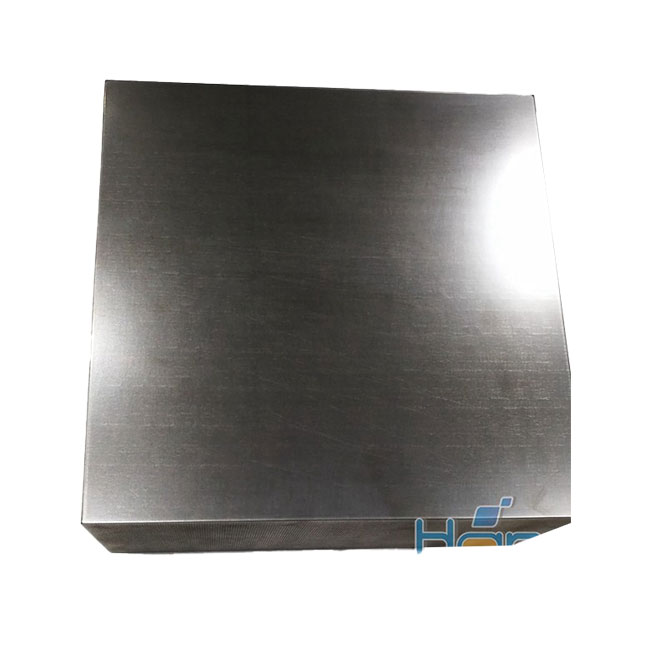
Understanding what dictates the final price helps you make smarter purchasing decisions. Cost differences are stark between extruded, molded, and isostatically pressed graphite. Extruded graphite represents the most economical method but offers lower structural integrity. Molded graphite provides a middle ground for general applications. Isostatic pressing applies equal pressure from all directions during forming. This creates a uniform density lacking weak points. The structural reliability easily justifies the premium for high-temp applications.
Table 1: Manufacturing Method Cost Comparison
Manufacturing Method |
Density Uniformity |
Cost Tier |
Best Application Fit |
|---|---|---|---|
Extruded |
Low to Moderate |
Economical |
Basic heating elements, low-stress melting |
Molded (Vibration/Compression) |
Moderate to High |
Mid-Range |
General foundry casting, non-ferrous metals |
Isostatically Pressed |
Ultra-High |
Premium |
Precious metals, high-temperature alloys, semiconductors |
Ash content limits and bulk density requirements directly scale the manufacturing cost. Purity dictates performance in sensitive melts. Lower ash means longer, more rigorous purification cycles using halogen gases. This demands significantly more energy and specialized equipment. Higher bulk density extends the lifespan by resisting chemical attack and physical erosion. You pay more upfront for dense materials, but they survive aggressive fluxes much better.
Standard volumetric capacities keep prices manageable. Custom-machined dimensions, however, increase material waste significantly. Adding pouring lips, specialized tapers, or pyrometer holes requires precise CNC milling. You pay for both the extra machine time and the scrapped material.
Budgeting accurately requires looking past the unit price to identify hidden procurement costs. Consider the following expenses:
Freight and specialized packaging: Fragile graphite requires heavy-duty crating and shock absorption to survive transit.
MOQ scaling: Minimum order quantities and tier-based volume discounts alter the math for small foundries.
Import duties: Cross-border tariffs and localized supply availability add unexpected fees to international orders.
You must align the oxidation threshold of the vessel with your specific melting temperatures. Holding temperatures matter just as much as peak melting points. Continuous thermal cycling stresses the material structure heavily. If you operate an induction furnace, the material must handle rapid heating without fracturing. Gas-fired furnaces pose different challenges, often introducing direct flame impingement. You need a denser structure to resist this localized thermal assault.
Porosity and chemical reactivity dictate long-term performance. You must evaluate chemical compatibility before introducing fluxes or reactive alloys. Highly specialized applications have incredibly stringent requirements. For instance, preventing metal cross-contamination is vital in energy storage sectors. You need a dedicated Graphite Crucible for Lithium-Ion Battery production to maintain ultra-low impurity levels. Standard industrial models will leach unwanted metals into the battery slurry, ruining the entire batch.
Pure machined graphite works exceptionally well for many non-ferrous metals. However, highly reactive alloys demand specialized protection. You should specify oxidation-resistant glazes when facing aggressive atmospheric conditions. These borosilicate or ceramic glazes seal the pores and prevent oxygen ingress. Specific inner linings become mandatory to prevent carbon pickup in sensitive alloys like low-carbon steel. You must weigh the cost of these linings against the value of your finished casting.
Never overlook the surrounding furnace setup. Assess your need for matching structural components. Many advanced buyers specify a High-Purity Graphite Plate for furnace base protection. It acts as an excellent thermal shield and catches accidental spills. Integrating matched components ensures uniform thermal expansion across your entire melting system.
Improper pre-heating protocols destroy expensive investments rapidly. Thermal shock and cracking remain the most common failure modes in any foundry. Even premium models fail instantly if you ignore operational ramp-up rates. Graphite absorbs moisture from the air during transit and storage. If you apply high heat too quickly, this trapped moisture turns to steam. The expanding vapor pressure causes instant, catastrophic cracking. A slow, staged heating protocol eliminates this risk entirely.
Atmospheric attack degrades carbon at elevated temperatures. Identifying the signs of premature oxidation saves substantial money. Look for surface powdering, scaling, or thinning walls near the top edge. You must validate supplier claims regarding oxidation-inhibiting treatments. Not all glazes perform equally under direct flame. If your furnace runs highly oxygenated burners, standard glazes will burn off prematurely. You need to adjust your fuel-to-air ratio to maintain a slightly reducing atmosphere.
Mechanical abrasion reduces lifespan much faster than thermal degradation. Physical wear from incorrect handling ruins perfectly good equipment. Lifting tools easily gouge the soft sides. Rough charge loading chips the interior bottom. You must train operators to respect the material limitations.
Follow these operational best practices to prevent physical wear:
Pre-heat tongs to match ambient furnace temperatures before gripping to avoid localized thermal shock.
Grip the vessel securely below the bilge line to distribute the heavy liquid metal weight evenly.
Lower metal ingots gently using tongs rather than dropping them to avoid fracturing the interior base.
Inspect lifting equipment weekly for distorted, bent, or sharp edges that could dig into the exterior walls.
Demand accountability from your vendors. Does the supplier provide batch-specific data sheets? You need hard numbers, not generalized marketing brochures. Insist on seeing documented bulk density, compressive strength, and ash content for your specific lot. High-quality manufacturers track this data rigorously. They will willingly share material certificates of analysis to prove their specifications.
Build a framework for calculating lifecycle cost-per-melt. Do not rely heavily on the initial invoice price. A cheap unit that fails after ten melts costs significantly more than a premium one lasting fifty. Factor in the labor cost of changing out failed equipment. Calculate the monetary value of lost production time. When you analyze the overall procurement cost over a full year, premium isostatically pressed materials almost always win.
Assess a vendor's ability to provide low-volume test units. You should test prototypes in your actual furnace before signing massive contractual commitments. A reliable partner will support small-batch testing to validate performance. They want to ensure their product matches your specific thermal cycling and chemical environment.
Evaluate their inventory buffering and lead time reliability. Check historical delivery performance for customized components. Supply chain delays halt production instantly. Ask potential suppliers how much raw material they hold in stock. Ensure they have localized warehousing to prevent cross-border transit delays when you need emergency replacements.
Optimal procurement balances thermal requirements with realistic lifecycle costs. We strongly advise buyers to audit their current failure rates before upgrading material specs. You must understand whether your operation suffers mostly from oxidation, thermal cracking, or physical mishandling. Upgrading to a denser material will not fix failures caused by aggressive tongs or skipped pre-heating cycles.
Focus on securing verifiable material data from transparent suppliers. Look past the initial quote to calculate your true cost per melt. Actionable next steps are straightforward: Request a technical consultation with prospective manufacturers today. Submit your precise furnace parameters, operating temperatures, and alloy types. Ask for detailed specification sheets so you can conduct an accurate, data-driven quote comparison.
A: Prices vary based on raw materials, manufacturing methods, and purity. Standard clay-graphite composites are cheaper and suit general casting. Synthetic graphite costs more due to complex purification. Isostatically pressed versions command a premium because they offer uniform density and superior high-temperature strength compared to standard molded variants.
A: Lifespan depends entirely on the application. Melting aluminum might yield 40 to 60 melts, while aggressive copper or brass melts might reduce this to 15 to 30. Continuous processing generally extends lifespan compared to frequent batch cooling. Heavy flux usage and improper handling will significantly reduce these baseline estimates.
A: Yes. You must implement a slow, controlled pre-heating process. This expels residual moisture absorbed during shipping or storage. Ramping up the temperature too quickly turns trapped moisture into steam, causing catastrophic thermal shock and cracking before the first melt even begins.
A: Linings are mandatory when you must prevent carbon pickup in sensitive alloys, such as low-carbon steel or specialized aerospace metals. For standard non-ferrous melting like aluminum or brass, pure machined graphite is usually sufficient. Evaluate your contamination limits before paying for specialized inner glazes.


