
Views: 0 Author: Site Editor Publish Time: 2026-06-11 Origin: Site


Semiconductor fabrication operates under extreme physical realities. Process temperatures inside crystal growth furnaces regularly exceed 2000°C. Corrosive plasma environments destroy standard industrial materials within hours. Traditional industrial graphite offers excellent thermal resistance. However, it introduces catastrophic metallic impurities into the sensitive silicon crystal lattice. Relying on under-specified graphite components creates serious business problems for modern foundries. You will experience micro-particle contamination inside your cleanrooms. Your silicon wafers will suffer extreme thermal stress, warping unpredictably under rapid heating cycles. Ultimately, these unmanaged material variables severely degrade overall semiconductor yield.
We designed this article to solve these critical engineering challenges. We provide engineering and procurement teams an objective framework. You will learn to clearly distinguish true semiconductor-grade carbon from traditional industrial variants. We also outline actionable criteria for material selection and rigorous supplier evaluation.
Purity Thresholds: Semiconductor graphite requires at least 99.9995% (5N) purity, with critical impurities like boron and aluminum restricted to sub-0.05 ppm levels, whereas traditional graphite permits parts-per-thousand impurities.
Structural Integrity: Semiconductor grades rely on synthetic, isostatically pressed manufacturing to achieve isotropic (uniform) properties, unlike the highly directional properties of traditional extruded graphite.
Particle Control: Selection relies heavily on grain size (typically 1–10 μm) and post-process coatings to prevent particle generation in vacuum environments.
Yield Impact: Precise matching of the Coefficient of Thermal Expansion (CTE) between the graphite fixture and the silicon wafer is non-negotiable to prevent wafer warping during thermal cycling.
Carbon materials share a foundational baseline chemistry. Both standard and highly purified grades feature an sp2 hybridized carbon structure. They share a layered hexagonal lattice. This distinct atomic arrangement provides natural thermal resistance. It also enables electrical conductivity through delocalized π (pi) electrons moving freely across planes. These base properties make carbon indispensable for high-temperature manufacturing.
However, you face a massive purity chasm between grades. The industry demands an absolute minimum 5N purity (99.9995%) for semiconductor fabrication. Traditional graphite often contains dangerous trace metals. You will regularly find ash, iron, boron, and aluminum trapped inside standard synthetic or naturally mined flake graphite. These impurities present unacceptable risks in modern sub-5nm node geometries.
Even minute trace amounts of boron act as unintentional dopants. Boron literally destroys the intended electrical characteristics of a silicon wafer. It alters the P-type and N-type junctions, rendering the microchips useless. Standard industrial materials permit impurities measured in parts-per-thousand. Semiconductor standards restrict critical contaminants to sub-0.05 parts per million.
Manufacturing origin drives these physical differences. Traditional graphite sourcing relies heavily on natural flake mining or standard extrusion processes. Extrusion forces raw material through a shaped die. This physical pushing aligns grains directionally, creating a highly anisotropic structure. It responds unevenly to heat. Conversely, semiconductor graphite remains strictly synthetic. Manufacturers produce it via isostatic pressing. They apply intense hydrostatic pressure evenly from all directions. This eliminates micro-structural defects. It ensures identical thermal and mechanical behavior across all three spatial axes.
Mapping fabrication demands to material properties reveals stark realities. Traditional grades fail quickly under extreme cleanroom conditions. Modern fabrication simply cannot tolerate unpredictable material behavior.
Consider monocrystalline silicon pulling via the Czochralski (CZ) process. Crystal growth requires massive crucibles and heaters. These components face continuous extreme temperatures well above silicon’s 1410°C melting point. They must never outgas or deform over multi-day growth cycles. Traditional graphite degrades rapidly in this environment. It introduces microscopic carbon dust directly into the molten silicon melt. This contaminates the entire silicon ingot, costing tens of thousands of dollars.
Chemical Vapor Deposition (CVD) and epitaxy bring entirely different challenges. Susceptors and wafer carriers must maintain a near-perfect flat profile. Rapid thermal processing subjects these fixtures to sudden heat spikes. Lower-grade graphite exhibits mismatched thermal expansion. This sudden mismatch causes deposited thin films to crack. It forces the delicate silicon wafer to bow or slip during deposition.
Plasma etching and ion implantation create highly corrosive environments. Equipment utilizes aggressive chemical agents like hydrofluoric and nitric acids. Aggressive ion bombardment quickly destroys weak physical structures. Graphite electrodes and focus rings must survive these relentless attacks. A tighter pore structure becomes mandatory here. Highly engineered synthetic carbon resists plasma erosion significantly longer than standard commercial grades. This resistance keeps chamber defect levels manageable over thousands of production hours.
Best Practice: Always align your application environment (vacuum, plasma, or chemical) with the specific pore structure and density of your carbon fixtures. Do not assume high purity automatically equals high erosion resistance.
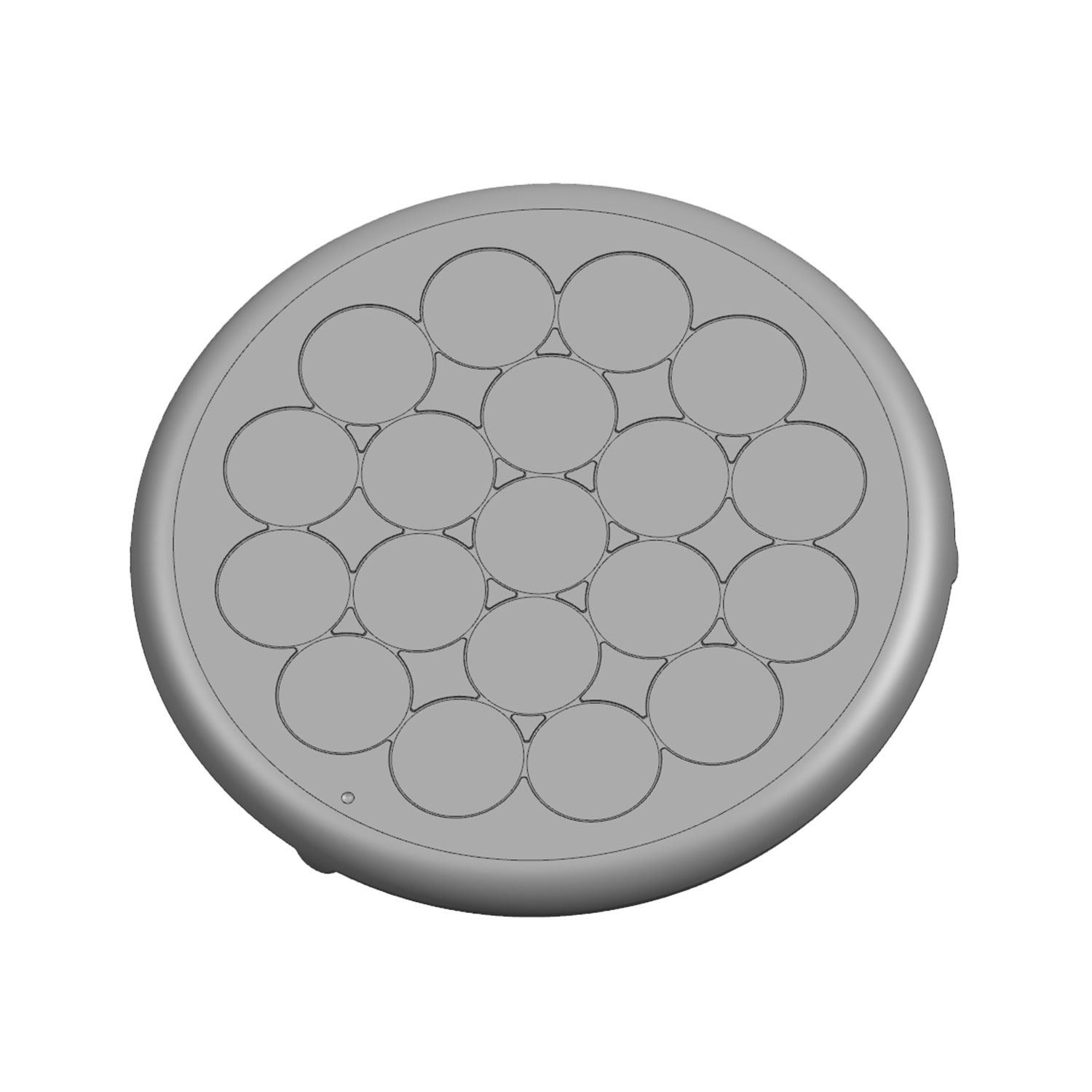
Engineering teams need a practical framework for shortlisting material grades. You must base your selection on rigid technical specifications rather than general supplier claims. Navigating material data sheets requires focusing on specific mechanical metrics.
First, evaluate particle size and apparent density. Specifying strict grain sizes remains critical for success. Foundational sizes typically include 1 μm, 5 μm, or 10 μm structures. Finer grains yield much smoother machined finishes. They dramatically reduce the risk of particulate generation. Dusting inside a vacuum chamber destroys defect-free yield targets instantly. A 1 μm grain size typically offers the highest resistance to structural shedding.
Second, scrutinize the Coefficient of Thermal Expansion (CTE). CTE serves as the defining mechanical metric for wafer carriers. Your carbon fixture must closely track the thermal expansion curve of bare silicon. Silicon expands and contracts across wide temperature gradients. Your holding fixture must match this physical movement precisely. Any slight deviation induces severe mechanical stress on the wafer.
Finally, assess Shore hardness and flexural strength. Engineers must balance brute strength against delicate machinability. The material must withstand automated robotic loading and heavy handling. It cannot crack when dropped slightly. Yet, it must allow for precision CNC machining. Foundries frequently need to cut complex, near-net-shape fixtures containing tiny gas channels and wafer pockets. Overly brittle graphite will chip during machining.
Property Metric | Traditional Industrial Graphite | Semiconductor Grade Graphite |
|---|---|---|
Purity Level | ~99% to 99.9% | ≥ 99.9995% (5N) |
Trace Metals (B, Al) | Parts per thousand | < 0.05 ppm |
Manufacturing Method | Extrusion or Natural Flake | Isostatic Pressing (Synthetic) |
Property Directionality | Anisotropic (Directional weakness) | Isotropic (Uniform across all axes) |
Typical Grain Size | > 20 μm (coarse) | 1 μm to 10 μm (ultra-fine) |
Raw synthetic carbon still requires extensive secondary processing. These advanced treatments justify the high premium cost associated with specialized grades. Evaluating a supplier requires understanding these hidden manufacturing steps.
Reaching 5N purity requires a complex high-temperature halogenation purification cycle. Suppliers cannot simply wash the material. They place pre-machined parts into sealed vacuum furnaces. They pump in reactive halogen gases at extreme temperatures. This gas chemically attacks and converts stubborn metallic oxides. It turns trapped aluminum and boron into low-melting-point halides. The furnace then extracts these gaseous halides, leaving ultra-pure carbon behind. This process often takes days to complete properly.
Next, manufacturers focus on surface densification and porosity control. Natural microscopic gaps exist between carbon grains. Specialized techniques reduce this open porosity by up to 80%. A denser surface limits the physical area vulnerable to chemical attack. It prevents corrosive plasma from eating away the fixture's interior. This densification keeps the structural integrity intact for a much longer period.
Finally, ultra-pure parts often require specialized protective coatings. Suppliers frequently apply high-purity Silicon Carbide (SiC) layers using CVD technology.
Surface Sealing: SiC coatings completely seal the porous surface, trapping any remaining internal particulates.
Outgas Prevention: The barrier prevents any residual volatile outgassing during rapid thermal heating.
Lifespan Extension: Hardened SiC layers extend consumable lifespan drastically in harsh CVD environments.
Common Mistake: Do not assume base 5N purity guarantees zero dusting. Always verify if your specific application requires an additional SiC coating to lock in micro-particles during intense vacuum cycles.
Procurement strategy plays a massive role in successful deployment. You must navigate complex macro-trends and strict implementation realities. Securing high-quality carbon materials is increasingly difficult.
The market relies heavily on the broader synthetic graphite supply chain. Asian processing facilities dominate base material production. However, high-end engineering and purification occur globally. Demand from the electric vehicle (EV) battery sector periodically strains base synthetic availability. EV anodes consume vast amounts of similar raw precursor materials. This macro-competition occasionally drives up lead times for specialized isostatic blocks.
You must also account for extreme qualification lead times. Switching suppliers requires extensive "copy exactly" validation protocols. Foundries demand definitive proof showing no shift in wafer defect density. This validation cycle takes months of pilot testing. You cannot swap critical consumables on short notice without risking massive yield fallout.
Evaluating supplier capabilities requires moving beyond basic material data sheets. You should audit their actual manufacturing facilities and internal processes.
In-House Metrology: Verify they possess advanced scanning electron microscopes and trace metal analyzers to prove sub-ppm claims.
Precision Machining Tolerances: Audit their CNC capabilities to ensure they can hold tight, near-net-shape tolerances on brittle materials.
Proprietary Purification: Confirm they own and operate their own halogenation furnaces rather than outsourcing this critical step.
Coating Technologies: Check if they can apply uniform SiC or specialized protective coatings internally to control quality.
Using semiconductor graphite is not merely adopting a marketing term. It is a strict engineering classification of ultra-purified, isostatically pressed synthetic carbon. Traditional materials will contaminate your cleanroom, warp your substrates, and ruin wafer yields. You must prioritize isotropic structures and extreme trace metal control.
We urge engineering teams never to compromise on foundational purity. Always insist on sub-ppm trace metal documentation from your vendors. Furthermore, precise CTE alignment between your fixtures and silicon wafers remains absolutely non-negotiable for maintaining high yields.
Your next step involves rigorous supplier auditing. Encourage your procurement officers to physically audit potential suppliers' halogenation purification processes. Request batch-specific purity certificates before initiating any pilot testing. Treat these fixtures as highly engineered, mission-critical assemblies rather than simple raw commodities.
A: No. Graphite is an electrical conductor, not a semiconductor. It lacks a bandgap. It is used extensively in the manufacturing equipment for semiconductors due to its thermal stability and chemical inertness, but it does not function as a semiconductor itself.
A: It generally requires a minimum purity of 99.9995% (often referred to as 5N purity). Total ash content must be negligible, and critical contaminants like boron and aluminum must be kept below 0.05 parts per million.
A: Isostatic pressing applies pressure equally from all directions during manufacturing. This results in an isotropic material—meaning its thermal and mechanical properties are uniform regardless of the direction it is machined or heated. Extruded graphite is anisotropic and responds unevenly to heat, risking wafer damage.
A: Smaller particle sizes (e.g., 1 to 5 microns) allow for tighter machining tolerances and a smoother surface finish. This significantly reduces the shedding of micro-particles (dust) during operation, which is critical for maintaining defect-free yields in a cleanroom environment.


