
Views: 0 Author: Site Editor Publish Time: 2026-06-09 Origin: Site


As chip architectures shrink below 3nm, thermal budgets leave zero room for error. Power electronics also shift aggressively toward high-temperature Silicon Carbide (SiC) and Gallium Nitride (GaN). These extreme environments punish standard materials severely. Legacy metals degrade, warp, or introduce trace impurities during fabrication. Conventional ceramics simply cannot survive the intense thermal shock. They also fail under prolonged plasma bombardment. This forces fabs to find a better structural material immediately.
Ultra-high purity semiconductor graphite has become the non-negotiable substrate for advanced device manufacturing. You must specify it strictly. Adherence to purity, isotropy, and surface treatment standards is mandatory. Otherwise, you risk catastrophic wafer contamination.
This guide outlines the engineering realities of integrating this advanced carbon material. We detail how to evaluate material grades properly. You will learn to protect your yield rates and scale production safely.
Purity is paramount: True semiconductor-grade graphite requires purification down to <5ppm (often ppb levels for trace metals) to prevent catastrophic wafer contamination.
Isotropy drives consistency: Isostatic graphite provides identical thermal and mechanical properties in all directions, essential for uniform CVD and epitaxy processes.
Surface treatments mitigate risks: Bare graphite risks outgassing and particle emission; vitreous sealing or SiC coatings are mandatory for critical plasma and high-vacuum applications.
Advanced node manufacturing leaves very little margin for error. Fab managers face massive challenges today. They experience exponential yield drops when process equipment fails. Sub-standard components often introduce metallic contaminants into the cleanroom. They also fail to maintain precise thermal gradients during critical crystal growth. A temperature variance of just a few degrees can ruin an entire batch of expensive wafers.
Alternative materials simply cannot keep up with these demands. Standard refractory metals like molybdenum pose severe contamination risks. At extreme temperatures, they shed heavy metals directly into the processing chamber. This destroys delicate wafer structures instantly. You cannot afford such metal ion contamination in sub-3nm logic processing.
Conventional ceramics also fail frequently in these settings. They lack the necessary thermal shock resistance for rapid heating and cooling cycles. They also lack the electrical conductivity you need for complex plasma control. When ceramics crack, they release particulate matter that ruins production yields.
Engineered carbon structures solve these problems beautifully. They offer a unique intersection of vital physical properties. They have ultra-low density, making automated handling much easier. They provide exceptionally high thermal stability. You can sustain operating temperatures exceeding 2,000°C without melting them. Furthermore, they offer total chemical inertness against harsh industrial etchants. This makes them the ultimate structural foundation for next-generation fabrication.
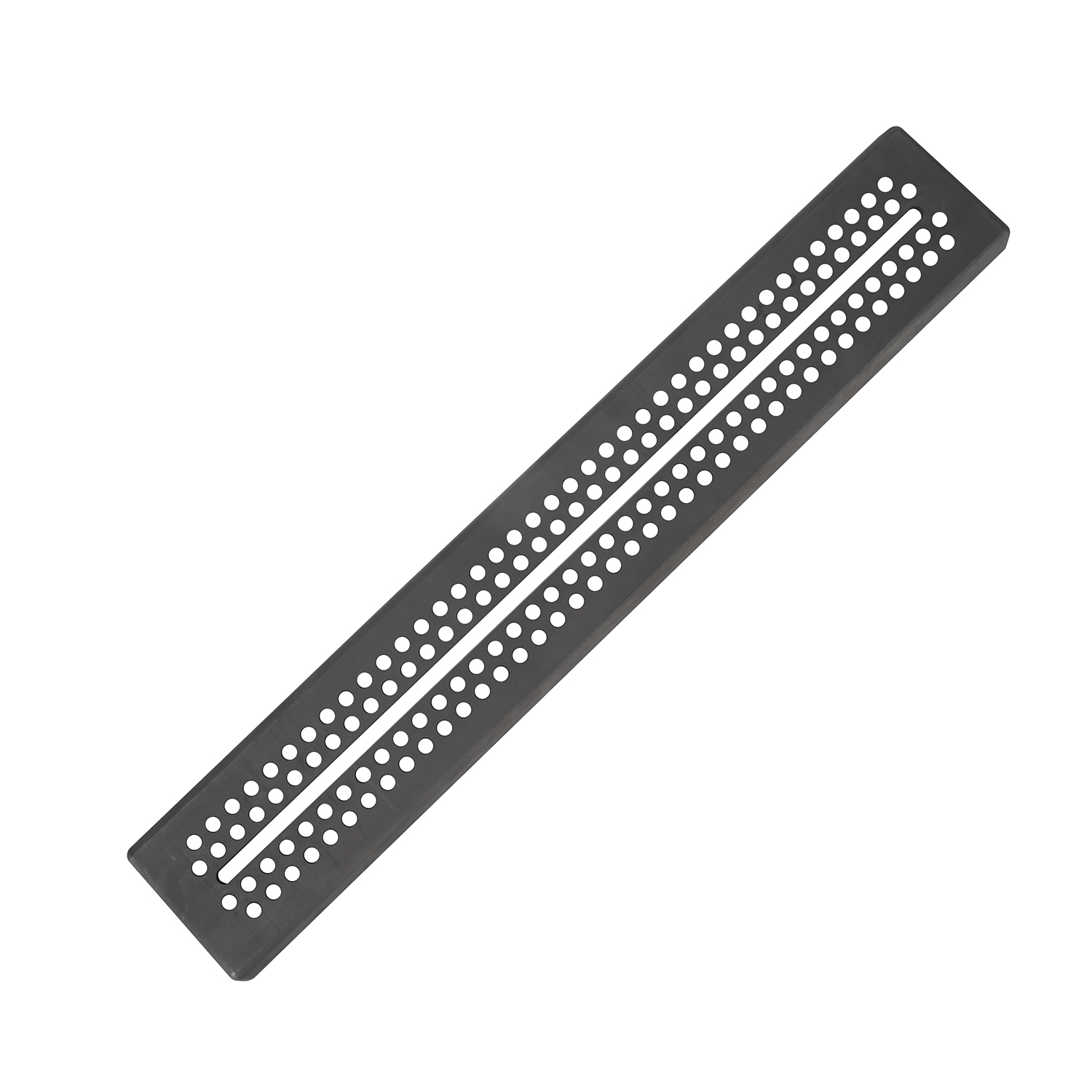
Fabs deploy customized carbon materials across multiple fabrication stages. Each application requires specific material behaviors to ensure success. We must match the correct component property to the desired fabrication outcome.
Your Czochralski (CZ) pullers rely heavily on high-grade carbon components. We use them extensively for heaters, crucibles, and heat shields.
Application: Structural and heating elements operating inside the pulling chamber.
Outcome: Rapid, uniform heat distribution is critical here. It ensures you produce defect-free silicon and SiC ingots. Without uniform heat, the crystal lattice develops fatal structural flaws. The material must remain absolutely stable while the crystal forms over several days.
Chemical Vapor Deposition (CVD) demands extreme environmental stability. Wafers sit directly on carbon susceptors during this delicate process.
Application: Base trays and susceptors for precise wafer positioning.
Outcome: Isotropic thermal conductivity ensures a highly uniform film thickness. Additionally, you must match thermal expansion coefficients perfectly. This prevents physical wafer warping as the chamber heats and cools rapidly. If the tray expands faster than the wafer, physical friction causes micro-scratches.
Modern etching equipment relies on precision-machined internal parts. Fabs use high-purity ion source grids and plasma electrodes daily.
Application: Conductive grids and consumable plasma electrodes.
Outcome: Excellent electrical conductivity enables precise ion beam control. Meanwhile, extreme chemical stability resists physical degradation. Constant plasma bombardment destroys weaker materials quickly, but premium carbon endures. It maintains critical dimensional tolerances much longer than traditional metals.
Procurement teams cannot treat these materials as generic commodities. You need a rigorous evaluation framework to qualify new suppliers. This prevents costly manufacturing errors before they happen.
Do not accept generic "high purity" claims from any vendor. You must require strict documentation of their exact purification processes. The baseline standard requires achieving under 5 parts per million (ppm) of total impurities. Top-tier applications even demand parts-per-billion (ppb) verification. Trace metals will ruin sub-3nm logic chips entirely. You must verify these metrics through independent lab reports. Halogen gas purification is often necessary to reach these extreme purity levels.
Manufacturing methods define the final physical properties of the material. Isostatic pressing creates a superior internal structure compared to standard extrusion methods.
Material Grade | Manufacturing Method | Thermal Conductivity | Best Application |
|---|---|---|---|
Isostatic Graphite | Cold isostatic pressing | 120-150 W/mK | CVD susceptors, CZ crucibles, precision chamber parts |
Extruded Graphite | Directional extrusion | 80-110 W/mK | EDM roughing, external heating elements |
Molded Graphite | Uniaxial pressing | 90-120 W/mK | Basic furnace fixtures, non-critical supports |
Isostatic grades are mandatory for susceptors and precise chamber parts. They provide non-directional, uniform strength and flawless thermal handling. Because they press the material from all sides equally, the grain structure remains isotropic. Extruded or molded grades remain sufficient only for less critical applications. You can use them safely for EDM roughing or external heating elements where direct wafer contact does not occur.
Assess your supplier's specialized coating capabilities carefully. Vitreous Carbon (VitreSeal) or Silicon Carbide (SiC) coatings are essential for advanced nodes. Uncoated surfaces remain highly porous at a microscopic level. Coatings seal this porous surface completely.
Why it matters: This eliminates outgassing entirely. Outgassing control is crucial for maintaining strict vacuum integrity during thin-film deposition. Trapped gases escape from porous materials and ruin the vacuum. Coatings also prevent microscopic particle generation. Carbon dust ruins delicate lithography and deposition yields instantly. You must ensure all critical parts receive proper sealing before entering the cleanroom.
Theoretical material properties mean nothing without precision manufacturing. You must evaluate how well suppliers can shape the raw material into complex geometries.
High-performance parts require extreme dimensional accuracy. Vendors must machine components to tolerances as tight as 0.012mm (12 microns). This applies specifically to delicate parts like ion source grids. Any deviation alters the plasma beam path. You must assess the supplier’s in-house CNC capabilities thoroughly. Look closely at their cleanroom packaging protocols too. Poor packaging introduces contaminants right before installation. Precision machining ensures components fit perfectly into complex fab assemblies.
All internal chamber components act as long-term consumables. High-density, fine-grain grades naturally resist plasma erosion much better. This physical resilience extends the Mean Time Between Replacements (MTBR). Cheaper, larger-grain materials erode remarkably fast under stress. They require frequent tool downtime for replacement. This heavy downtime offsets any initial material savings completely. You must prioritize material density to maximize component lifespan.
Fabs must meet strict Scope 3 emission targets today. High-quality semiconductor graphite is highly durable and often recyclable. Partnering with suppliers utilizing sustainable purification practices helps immensely. It allows you to hit these crucial ESG goals faster. Sustainable sourcing builds long-term operational resilience for your facility. Many top-tier vendors now use renewable energy for their high-temperature graphitization processes.
Selecting the right vendor requires strategic forward planning. Market dynamics change rapidly, affecting material availability and lead times across the globe.
Surging EV and clean-energy markets strain premium carbon supplies globally. The solar industry consumes massive volumes of similar materials. Evaluate vendors based heavily on their active capacity expansion. Check their local inventory buffers carefully. You need guaranteed availability to keep fabrication lines running smoothly. Do not rely on single-source suppliers for critical chamber components. Diversify your vendor base to mitigate geopolitical and logistical risks.
Never rush straight into high-volume purchasing. Start with limited material sampling instead. Run computational thermal modeling first. Test the supplier's specific grade extensively before committing to volume production. This verifies their performance claims against your actual chamber conditions. Prototyping reveals hidden thermal expansion mismatches before they ruin production wafers.
Take immediate action to qualify your prospective vendors. Request a detailed trace metal analysis report today. Ask for a comprehensive machining tolerance capability matrix. Establishing this strict performance baseline early prevents disastrous yield losses later. Compare these reports across at least three different suppliers.
We can draw several vital conclusions about material selection in modern fabrication facilities:
Semiconductor carbon is a highly engineered foundational material, never a basic commodity.
Yield rates in sub-3nm logic and EV controllers tie directly to strict material purity.
Isotropy and coating quality determine component survival inside the intense fab environment.
Shift your evaluation criteria away from raw material cost toward overall component lifespan and reliability.
Engineering teams must rigorously verify supplier CNC capabilities to ensure reliable next-generation device manufacturing.
By implementing these evaluation standards, you protect your production yields. You will scale high-performance device manufacturing with far fewer interruptions.
A: No. Graphite is an electrical conductor via delocalized pi electrons. While it is essential for manufacturing semiconductors, it lacks the adjustable bandgap required to function as a semiconductor itself.
A: Graphite eliminates the risk of heavy-metal contamination during high-temperature wafer processing. It is also lighter, easier to machine into complex geometries, and gains strength at elevated temperatures where metals soften.
A: Semiconductor graphite refers to the bulk, ultra-pure carbon material used for manufacturing equipment components like heaters and crucibles. Graphene is a single-atom-thick layer of carbon being researched as a replacement for silicon in the chips themselves, though it faces commercialization bottlenecks.
A: In high-vacuum environments, trapped gases in porous materials escape and outgas. This contaminates the chamber and ruins thin-film depositions. You prevent this by using ultra-dense isostatic graphite and sealing it completely with vitreous or SiC coatings.


